
Our Location
304 North Cardinal St.
Dorchester Center, MA 02124

The physical vs digital debate has been going for years. Here's an honest look at which format actually helps you learn better and when to use each one.
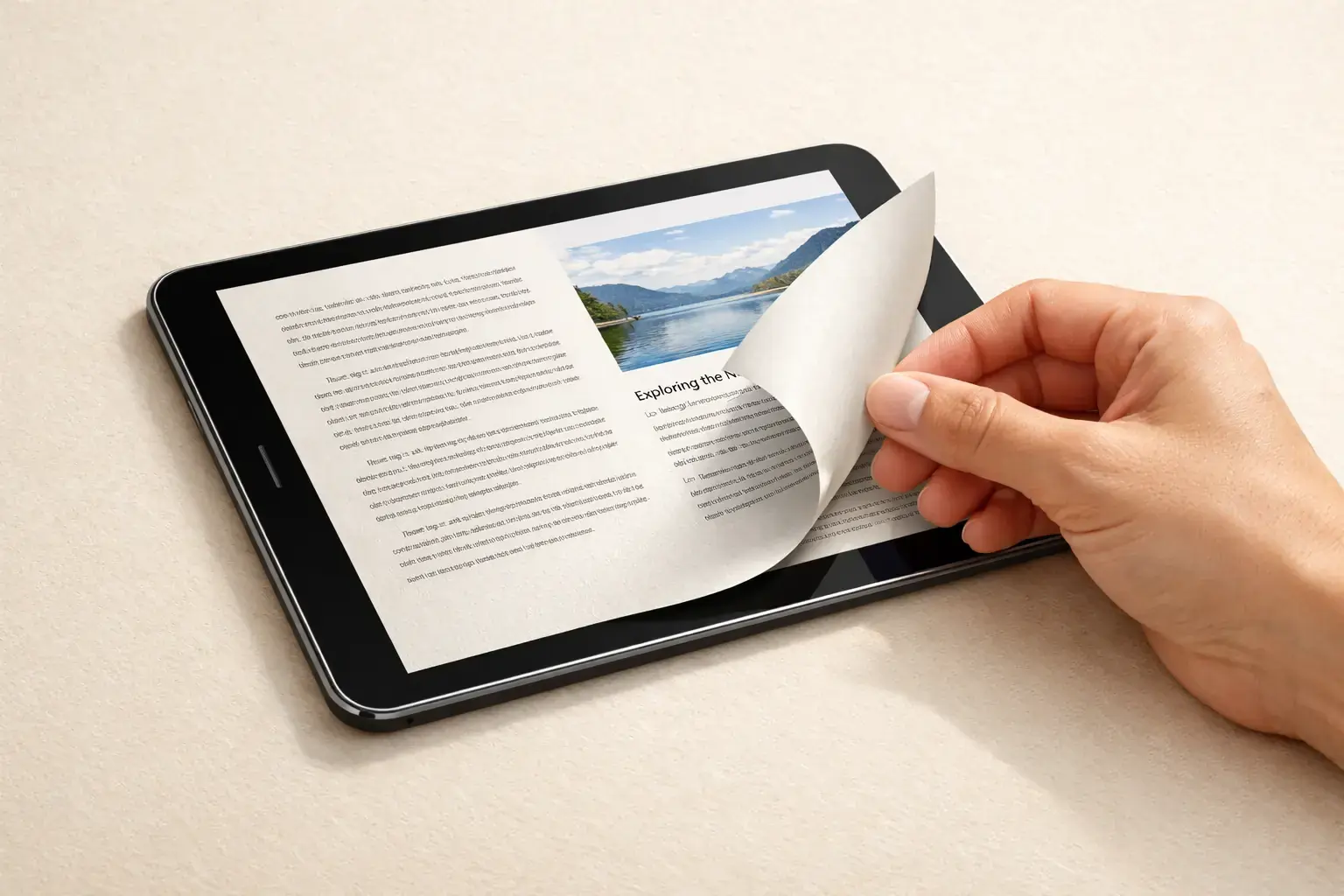
Ask someone whether they prefer physical books or e-books and you’ll get a very strong opinion. Print lovers talk about the feel of paper, the smell of a new book, the focus that comes from holding something real. Digital readers talk about convenience, instant access, and carrying an entire library on one device.
Both sides make fair points. But both sides are also missing the bigger picture.
The real question is not which format is better in general. It’s which format works better for what you’re actually trying to do. Let’s be honest about both.
What physical books do well
There’s real science behind the preference for print when it comes to deep, serious reading.
Some research suggests that readers tend to remember where something appeared on a physical page. “It was near the bottom of a right-hand page.” That spatial memory can help with recall in a way that scrolling on a screen doesn’t quite replicate.
Physical books also remove a lot of noise. No notifications, no battery warnings, no app updates. When you sit with a print book, there’s nothing else competing for your attention. For heavy non-fiction, philosophy, or anything that requires you to really sit and think, that distraction-free reading experience is genuinely useful.
And for a lot of readers, the physical interaction itself is part of how they process ideas. Scribbling in margins, folding corners, underlining sentences. It feels more personal.
What e-books do well
E-books win on almost every practical front.
Access is the most obvious one. In India, a good physical bookstore with a wide range is mostly a metro city privilege. An e-book store carries thousands of titles and delivers any of them in a few minutes, wherever you are.
Cost is another clear advantage. The same content in digital form almost always costs less. For students, young professionals, or anyone watching their spending, this makes a real difference over the course of a year.
Searchability is something people don’t think about until they’ve used it. Being able to type a word and find every instance of it across an entire book is genuinely useful, especially when you’re using a book for reference rather than reading it cover to cover.
And portability speaks for itself. One device, your entire library. Every spare moment becomes a potential reading opportunity without carrying anything extra.
What research actually shows
The research on this is less dramatic than headlines usually suggest.
For storytelling, biographies, and essays, the difference in how much people understand or remember between print and digital is fairly small, especially for readers who are genuinely engaged with the material.
For practical, skill-based reading, e-books actually hold up well because of how easy it is to search, jump between sections, and zoom into diagrams or charts.
Where print tends to have a clear advantage is in long, dense reading that requires hours of unbroken focus. Academic textbooks, complex history, that kind of thing. A practical career guide or a book on building habits? Perfectly fine as an e-book. Often better.
The honest answer: depends on what you’re trying to do
Here’s a simple way to think about it:
Go physical when you’re reading something long and immersive, when you want to make handwritten notes, when you genuinely enjoy the tactile experience, or when you want a screen-free hour before sleep.
Go digital when you need the information quickly, when you’re reading for a specific skill, when you’re on a budget, when you read in short sessions throughout the day, or when access to a bookstore is inconvenient.
What most regular readers actually do
Most people who read a lot end up using both. They keep physical copies of books they love and return to repeatedly, the ones that feel like old friends on a shelf. And they read practical, informational, or skill-based books digitally because the goal is the knowledge, not the object itself.
There’s no loyalty test here. Use whatever format actually gets you reading. That’s the only measure that matters.
One last thing
The best book is the one you actually finish. If an e-book costs Rs. 149 and you read it on your phone during your commute, it will do more for you than a beautiful hardcover sitting unread on your shelf looking impressive.
Format is packaging. Knowledge is the product.
